

Charlotte drivers know this city keeps moving — morning rush on I-77 toward Uptown, bumper-to-bumper on I-485 around South Charlotte, constant stop-and-go through SouthPark and Ballantyne at midday. Between the heavy commuter traffic, Carolina humidity, and summer heat that routinely pushes into the low 100s, vehicles in Charlotte take a genuine beating every single week.
The problem is that most warning signs don’t announce themselves with a siren. They creep in quietly — a noise here, a light there, a performance change that’s easy to chalk up to something else. And in a city where most people genuinely can’t afford to lose their vehicle for a day, those quiet signals get ignored until they become serious problems.
This guide walks through the top warning signs every Charlotte driver should recognize — and explains exactly what each one means before it turns into a roadside breakdown or an expensive repair. The good news: with Mobile Mechanic of Charlotte, every one of these issues can be diagnosed and addressed at your home, office, or parking lot, without a shop visit and without a tow.
1. Your Check Engine Light Is On — and Has Been for a While
Let’s start with the most commonly ignored warning signal in automotive history. The check engine light on your dashboard is connected to your vehicle’s onboard diagnostic system, which monitors dozens of sensors across your engine, fuel system, emissions system, and transmission. When something falls outside normal parameters, the light comes on and a fault code gets stored.
Here’s the critical part that most drivers miss: the light doesn’t distinguish between a loose gas cap and a misfiring cylinder. Both trigger the same amber glow. Ignoring it for weeks means you have no way of knowing whether you’re driving with a minor sensor glitch or an active mechanical problem that’s quietly worsening with every mile.
In Charlotte’s traffic conditions specifically, small underlying engine problems tend to compound faster. High under-hood temperatures during summer commutes, repeated stop-and-go thermal cycling, and the general demands of daily driving all accelerate the progression of whatever is triggering that code.
Our car diagnostics service in Charlotte brings professional OBD scanning tools directly to your location. We read every fault code your vehicle has stored, explain what each one means in plain language, and give you a clear picture of what needs to be done — before you spend another week driving blind. For Charlotte auto repair, this is almost always the right starting point when something doesn’t feel right.
2. Brake Noises — Squealing, Grinding, or a Soft Pedal
Your braking system is the single most safety-critical component on your vehicle, and Charlotte’s traffic conditions are particularly demanding on brakes. Whether it’s repeated hard stops on I-85 during rush hour, navigating the hilly terrain in areas like Myers Park and Dilworth, or the long downhill grades in Ballantyne — Charlotte drivers work their brakes hard.
The warning sounds follow a predictable progression that’s worth understanding:
A high-pitched squeal when you apply the brakes is typically a wear indicator — a small metal tab deliberately designed to squeal when your brake pads reach minimum thickness. This is your early warning that a pad replacement is coming soon. It’s not an emergency yet, but it needs to be scheduled promptly.
A grinding or metal-on-metal sound under braking means your pads are fully worn and the metal backing plate is contacting the rotor directly. At this stage, you’re damaging your rotors with every stop, and what was a straightforward pad replacement has become a more expensive pad-and-rotor job.
A soft, spongy, or low brake pedal suggests a brake fluid issue — either moisture contamination that’s reduced the fluid’s effectiveness, or an early-stage leak in the brake lines or caliper seals. This needs immediate attention.
A car that pulls to one side during braking points to uneven pad wear, a sticking caliper, or brake fluid contamination on one side — all of which compromise straight-line stopping and vehicle control.
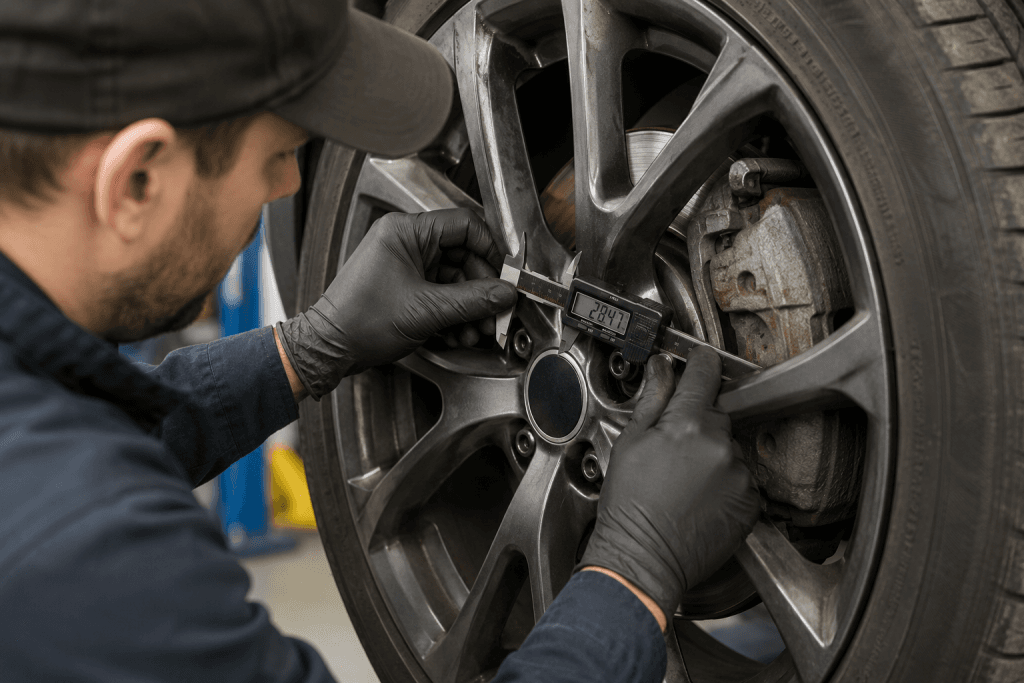
Our brake service in Charlotte covers the complete system — pad thickness measurement, rotor inspection and replacement, caliper function, brake fluid condition and bleeding — all performed at your location. Don’t delay on brake symptoms in a city where you depend on your stopping power in heavy traffic every single day.
3. Your Engine Is Running Rough, Misfiring, or Losing Power
A smooth-running engine should be almost invisible — you shouldn’t really notice it unless you’re paying attention. When you start noticing it — a rough idle at traffic lights, hesitation when accelerating from a stop, an engine that stumbles under load, or a vibration through the steering wheel or floor — something has shifted in how your engine is operating.
Common causes in Charlotte’s climate include worn spark plugs that misfire more readily in high heat, a clogged air filter restricting the airflow the engine needs, a failing ignition coil, or fuel delivery irregularities from a dirty injector or throttle body. Charlotte’s humidity also accelerates ignition wire degradation over time, which contributes to misfires that come and go unpredictably.
A misfiring engine isn’t just a performance problem — unburned fuel passing through the exhaust accelerates catalytic converter degradation, a repair that costs far more than a tune-up. Addressing the symptom early is significantly cheaper than addressing the consequence later.
Our tune-up service in Charlotte addresses every component involved in smooth engine operation — spark plugs, ignition wires, distributor cap and rotor on older vehicles, air filter, fuel filter, battery health, fluid levels, and a full belt inspection. Performed at your driveway or office parking lot, a tune-up is one of the highest return-on-investment maintenance services available for any Charlotte driver putting serious daily miles on their vehicle.
4. Your Temperature Gauge Is Climbing or Your Engine Is Overheating
Charlotte summers are long, humid, and relentless — and they’re genuinely hard on cooling systems. When temperatures climb into the low 100s and your engine is sitting in slow traffic on the Billy Graham Parkway with no airflow through the radiator, your cooling system has to work at its maximum capacity for extended periods.
A temperature gauge that’s creeping higher than normal, a warning light shaped like a thermometer, steam rising from under the hood, or a sweet chemical smell from coolant are all signs that your cooling system is struggling. These are not symptoms to drive through and see if they resolve.
Engine overheating in Charlotte is a genuine risk because the failure mode is severe. A briefly overheated engine can warp cylinder heads, blow head gaskets, or in extreme cases seize entirely — transforming what would have been a $300 cooling system repair into a repair that rivals the value of the car.
The most common underlying causes include degraded coolant that’s lost its corrosion-inhibiting properties, a failing thermostat that sticks closed, a cracked or leaking coolant hose, a clogged radiator from years of mineral buildup, or a water pump that’s beginning to fail.
Our radiator repair service in Charlotte covers every component of your cooling system — diagnosed and repaired at your location before small issues turn into catastrophic engine damage. If your temperature gauge has done anything unusual in the past month, this is not a symptom to keep monitoring.
5. Your AC Isn’t Cooling Properly
In Charlotte’s climate, this isn’t just a comfort issue — it’s a health and safety concern from June through September. When outside temperatures exceed 95°F, a vehicle interior parked in the sun can reach 140°F or higher. An AC system that’s blowing warm or insufficiently cool air means your cabin temperature will climb quickly in those conditions.
Common culprits include refrigerant that’s slowly leaked out over the winter and spring, a failing AC compressor that’s struggling under the summer load, a clogged cabin air filter restricting airflow, or a condenser that’s blocked with debris from Charlotte’s pollen-heavy spring season.
The critical timing issue with AC in Charlotte is that most failures announce themselves on the first truly hot day of the year — exactly when every HVAC shop in the city is already backed up with appointments. Getting your AC inspected and recharged in early spring, before demand peaks, means you’re never caught off guard.
Our AC repair and recharge service in Charlotte diagnoses your full AC system, locates leaks, repairs faulty components, and restores refrigerant levels — all at your location. Don’t discover your AC doesn’t work on the first 98°F day of summer.
6. Unusual Noises Under the Hood — Squealing, Knocking, or Rattling
Not every warning sign comes with a dashboard light. Your ears are one of your best diagnostic tools, and unusual sounds from under the hood often have very specific meanings:
A high-pitched squealing that changes with engine speed often indicates a slipping or worn serpentine belt. The serpentine belt drives your alternator, AC compressor, power steering pump, and water pump simultaneously — when it fails, multiple systems go down at once, and you’re stranded.
A deep knocking or thumping from the engine, especially under load or acceleration, can indicate low oil pressure, worn rod bearings, or serious internal engine wear. This sound should prompt an immediate stop and a call — driving with engine knock accelerates damage with every revolution.
A rattling sound from underneath, particularly over Charlotte’s rougher roads or speed bumps, often points to a heat shield, exhaust component, or suspension element that’s worked itself loose.
A clicking or ticking sound at idle that changes with engine temperature is often a valve train issue related to oil pressure or viscosity — a sign that your oil change interval may be overdue.
Our car diagnostics service and our oil change service address the most common underlying causes of these symptoms directly at your Charlotte location. When in doubt, a professional diagnosis is always faster and cheaper than continued guessing.
7. Your Car Is Hard to Start, Stalling, or Losing Power on Acceleration
These three symptoms — difficulty starting, unexpected stalling, and hesitation under acceleration — often share a common thread: fuel delivery. A weakening fuel pump that’s struggling to maintain adequate pressure will produce all three, often intermittently at first before worsening.
Charlotte’s summer heat is particularly hard on fuel pumps, because high ambient temperatures reduce the fuel pump’s ability to cool itself (fuel pumps in most vehicles are submerged in the gas tank and cooled by the surrounding fuel). Consistently running your tank below a quarter-full in summer accelerates pump wear significantly.
Other contributing factors can include a clogged fuel filter, failing fuel pressure regulator, or dirty fuel injectors that aren’t delivering the right spray pattern under load.
Our fuel pump repair service in Charlotte diagnoses and resolves fuel delivery problems at your location — whether it’s a filter service, a pressure test, or a full pump replacement. Don’t wait until a hard start becomes a no-start on a Charlotte road.
8. Belts That Squeal, Slip, or Show Visible Cracking
Most drivers never look at their belts until something goes wrong. In Charlotte’s climate — summer heat that causes rubber to harden and crack, combined with high humidity that accelerates belt glazing — proactive belt inspection is a genuinely important part of vehicle ownership.
A squealing noise that’s most prominent on startup and diminishes as the engine warms is often a slipping belt or worn tensioner. Visible cracking on the outer surface of a serpentine belt, or fraying at the edges, means replacement is overdue. On timing belts, which can’t be visually inspected without partial disassembly, adherence to the manufacturer’s replacement interval is the only reliable protection — and the consequences of a missed interval on an interference engine can be complete engine failure.
Our belt replacement service in Charlotte covers serpentine belt, timing belt, and associated tensioner and idler pulley inspection and replacement — all performed on-site. It’s one of the most cost-effective preventive services available, and the cost of proactive replacement is a fraction of the cost of what a belt failure triggers.
9. You’re Buying a Used Car in Charlotte and Haven’t Had It Inspected
This one isn’t a warning sign from your current vehicle — it’s a warning sign for your next one. Charlotte’s active used car market means there are genuine deals available, but also a significant number of vehicles that have spent years on I-485 and I-77 with maintenance deferred and problems either unaddressed or actively concealed.
A car that drives acceptably on a 10-minute test drive through a parking lot may have worn brakes, a stressed cooling system, impending fuel pump failure, or a fault code that was cleared the night before you arrived. A professional inspection changes that equation entirely.
Our pre-purchase car inspections in Charlotte meet you at the seller’s location and give you a thorough, independent assessment of the vehicle’s mechanical and safety condition before you commit to the purchase. In a market where used car prices remain elevated, it’s one of the smartest few hundred dollars you can spend.
Mobile Mechanic Near Charlotte: Expert Care That Comes to You
Here’s the consistent thread running through every warning sign above: the longer it goes unaddressed, the more expensive the repair becomes. A $200 brake pad service ignored becomes a $600 pad-and-rotor replacement. A $150 cooling system service ignored becomes a $3,000 head gasket repair. A $100 tune-up ignored becomes a failed catalytic converter.
The barrier for most Charlotte drivers isn’t awareness — it’s logistics. Finding time to get a car to a shop, arranging a ride, taking time off work, and waiting for a callback is genuinely difficult when life is already full. Mobile Mechanic of Charlotte removes every piece of that friction.
Our certified, insured technicians come to your home, office, or any location across Charlotte and surrounding areas — fully equipped to handle diagnostics, repairs, and maintenance on-site — while you carry on with your day. Same-day and emergency service are available. Transparent pricing means you know the cost before any work begins. No hidden fees, no inflated shop overhead, no surprises.
Don’t Wait for a Warning Sign to Become a Breakdown
Every one of the symptoms in this guide is easier, faster, and cheaper to address today than it will be after another month of Charlotte commuting. If your car is showing any of these signs, the smart move is a professional diagnosis before the small problem becomes a big one.
Contact Mobile Mechanic of Charlotte today to schedule your service or call us at 678-846-3789 for same-day and emergency assistance anywhere in the Charlotte area. We come to you — because your time is too valuable to spend in a waiting room.