

If you hear a high-pitched squeaking sound when applying the brakes, it is often a sign that something in the braking system needs attention. Many drivers in Charlotte notice brake noise when slowing down or stopping at traffic lights and wonder what is causing it.
Brake squeaking can occur for several reasons, ranging from normal brake pad wear to moisture buildup or worn components. Because the braking system is one of the most important safety systems in your vehicle, identifying the cause early can help prevent more serious problems.
Understanding why brakes squeak can help drivers determine when inspection or maintenance is necessary.
How the Brake System Works
Your vehicle’s braking system slows the car by creating friction. When you press the brake pedal, brake pads press against the brake rotors to reduce wheel speed.
Several components work together during braking:
• Brake pads
• Brake rotors
• Brake calipers
• Brake fluid
• Brake hardware and clips
Over time, these parts wear down due to repeated use. When certain components begin to wear or become contaminated, squeaking or squealing sounds may develop.
Common Reasons Brakes Squeak When Stopping
Worn Brake Pads
One of the most common causes of brake squeaking is worn brake pads. Most modern brake pads include built-in wear indicators designed to produce a squealing sound when the pads become thin.
This noise acts as an early warning sign that the brake pads may need replacement.
Drivers may notice:
• Squealing sound when braking
• Noise that becomes louder over time
• Reduced braking performance
Replacing worn brake pads can restore quiet and effective braking.
Brake Dust Buildup
Brake pads naturally produce dust as they wear down. This dust can accumulate between the brake pad and rotor surface, which may cause a squeaking sound during braking.
Brake dust is common, especially in vehicles driven frequently in stop-and-go traffic. Cleaning the braking components during routine service can often eliminate the noise.
Moisture on Brake Components
In some cases, squeaking brakes may occur due to moisture buildup on the brake rotors. Rain, humidity, or morning dew can create a thin layer of rust on the rotor surface.
This light rust usually disappears after the brakes are applied several times. Temporary squeaking caused by moisture is generally not a serious issue.
However, if the noise continues after driving for several minutes, the brakes may need inspection.
Glazed Brake Pads or Rotors
Brake components can become glazed when excessive heat builds up during heavy braking. This condition creates a smooth surface on the brake pads or rotors, which reduces friction and may cause squeaking sounds.
Drivers may notice brake noise when slowing down, particularly after driving downhill or during repeated hard braking.
Resurfacing or replacing affected components may be necessary.
Loose Brake Hardware
Brake pads are held in place by clips, shims, and other hardware components. If these parts become loose or worn, they may cause vibration during braking.
This vibration can create squeaking or rattling sounds when the brake pedal is pressed.
During brake service, technicians often inspect and replace worn hardware to prevent noise.
When Brake Noise May Indicate a Serious Problem
Although some brake squeaking can occur naturally, certain noises may indicate a more serious issue.
Drivers should schedule an inspection if they notice:
• Grinding noises when braking
• Strong vibration in the brake pedal
• Longer stopping distances
• Brake warning lights on the dashboard
Grinding sounds may indicate that the brake pads are completely worn and that metal components are contacting the rotor surface.
Because braking performance affects vehicle safety, these symptoms should be addressed promptly.
How Mobile Mechanics Diagnose Brake Noise
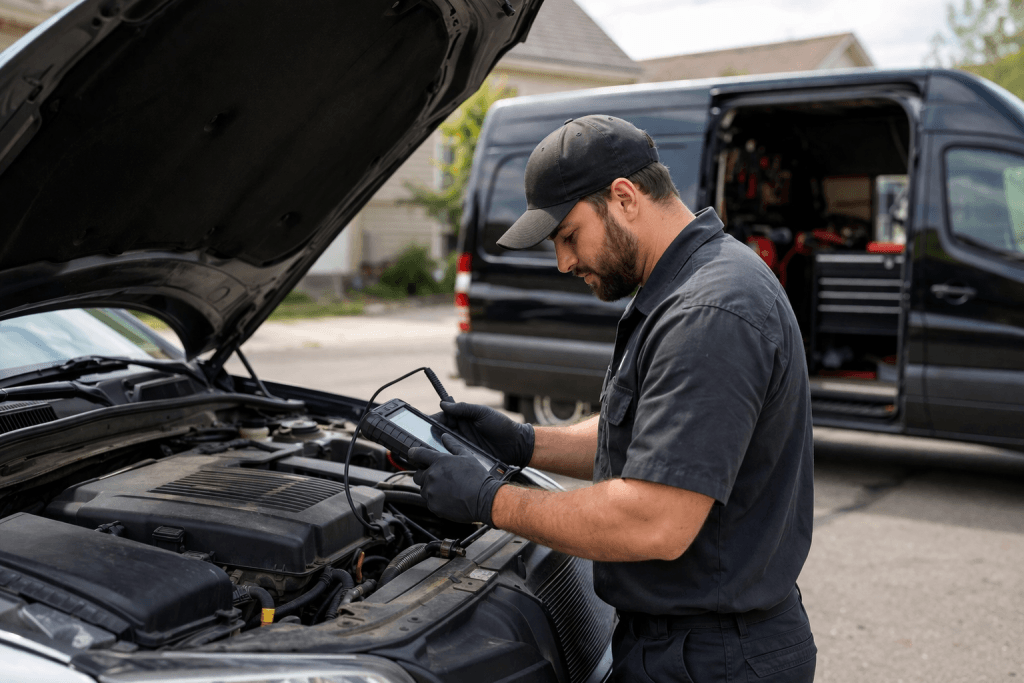
Mobile mechanics can inspect brake systems at your location to identify the cause of squeaking or other unusual sounds.
A typical brake inspection may include examining brake pad thickness, checking rotor condition, inspecting calipers, and evaluating brake hardware.
By identifying worn or damaged components, technicians can recommend the appropriate repair to restore safe braking performance.
Benefits of Mobile Mechanic Services in Charlotte
Mobile mechanic services allow drivers to receive vehicle diagnostics without visiting a repair shop. Technicians can inspect your vehicle at your home, workplace, or parking location.
For drivers experiencing brake noise, this service provides a convenient way to have the braking system evaluated without interrupting daily activities.
Professional inspections can help determine whether the noise is caused by normal wear or a mechanical problem.
Preventing Brake Noise
Routine brake maintenance can help reduce the likelihood of squeaking and extend the life of braking components.
Drivers should have their brakes inspected periodically, especially if they notice unusual sounds when stopping. Regular maintenance helps ensure that brake pads, rotors, and hardware remain in good condition.
Maintaining proper braking performance helps ensure safe and reliable driving.
If your brakes squeak when you stop, the cause may involve worn brake pads, brake dust buildup, moisture on the rotors, glazed components, or loose brake hardware. While some brake noise can be normal, persistent squeaking should be inspected to ensure the braking system is functioning properly.
Professional diagnostics can help identify the cause and restore quiet, effective braking.
Need Brake Inspection in Charlotte?
If your vehicle’s brakes are making unusual noises, professional inspection can help identify the cause and prevent further damage.
Mobile Mechanic in Charlotte, NC provides convenient on-site vehicle diagnostics and brake inspections throughout Charlotte.
Schedule service today to have your braking system inspected and keep your vehicle operating safely.